
At Open Grain, we love projects that push us to combine precision engineering with distinctive materials. When Beatrice Forms approached us to produce 50 custom, screw-in neck finials and internal anchor blocks for their custom mannequins, we knew standard hand-turning wouldn’t be the most efficient or repeatable solution.
Beatrice Forms builds customized, millimeter-accurate dress forms generated from smartphone 3D body scans. Because their forms sit at the cutting edge of digital fabrication and bespoke sewing, their crowning hardware needed to match: functionally versatile, mechanically solid, and visually striking.
The Functional Design: Quick-Release Necklines
A dress form finial does far more than just look handsome on a stand:
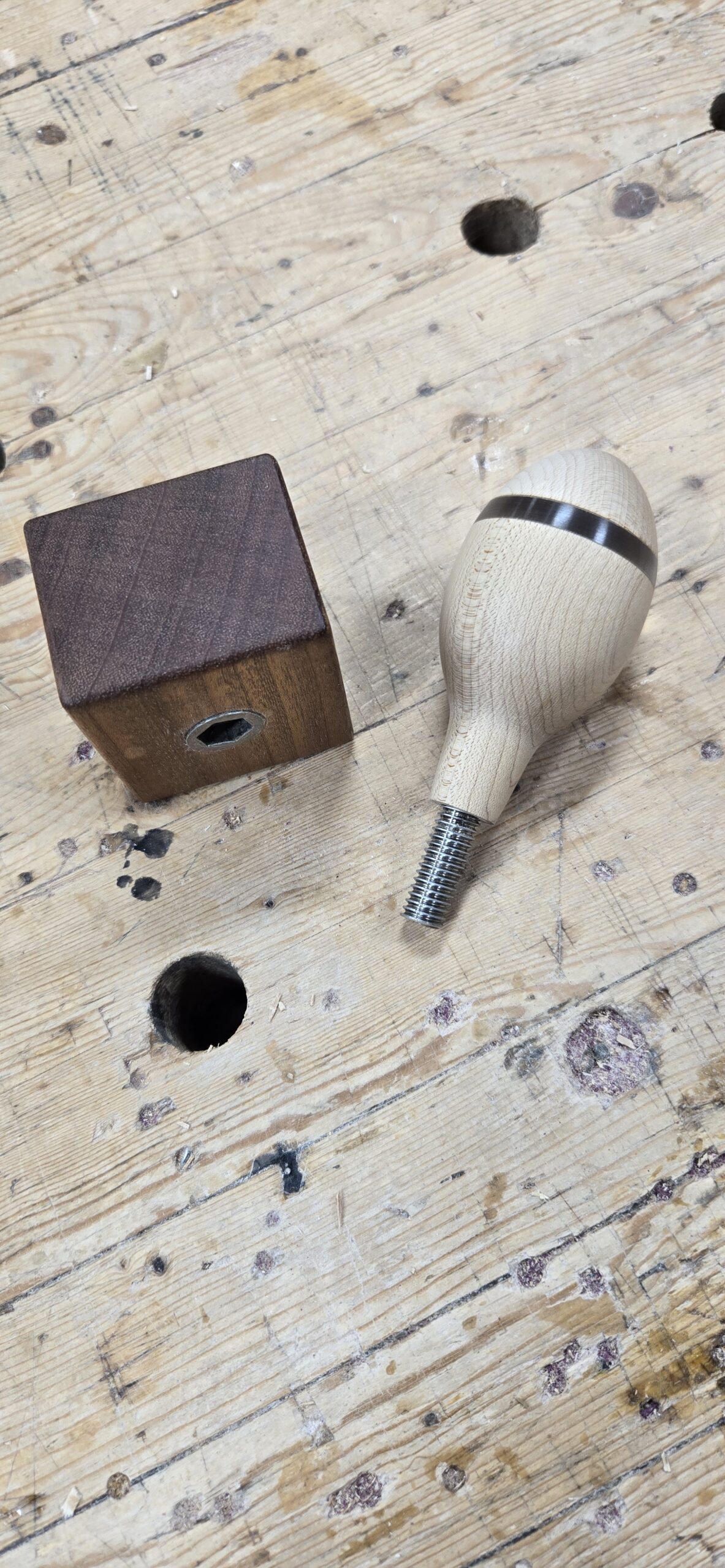
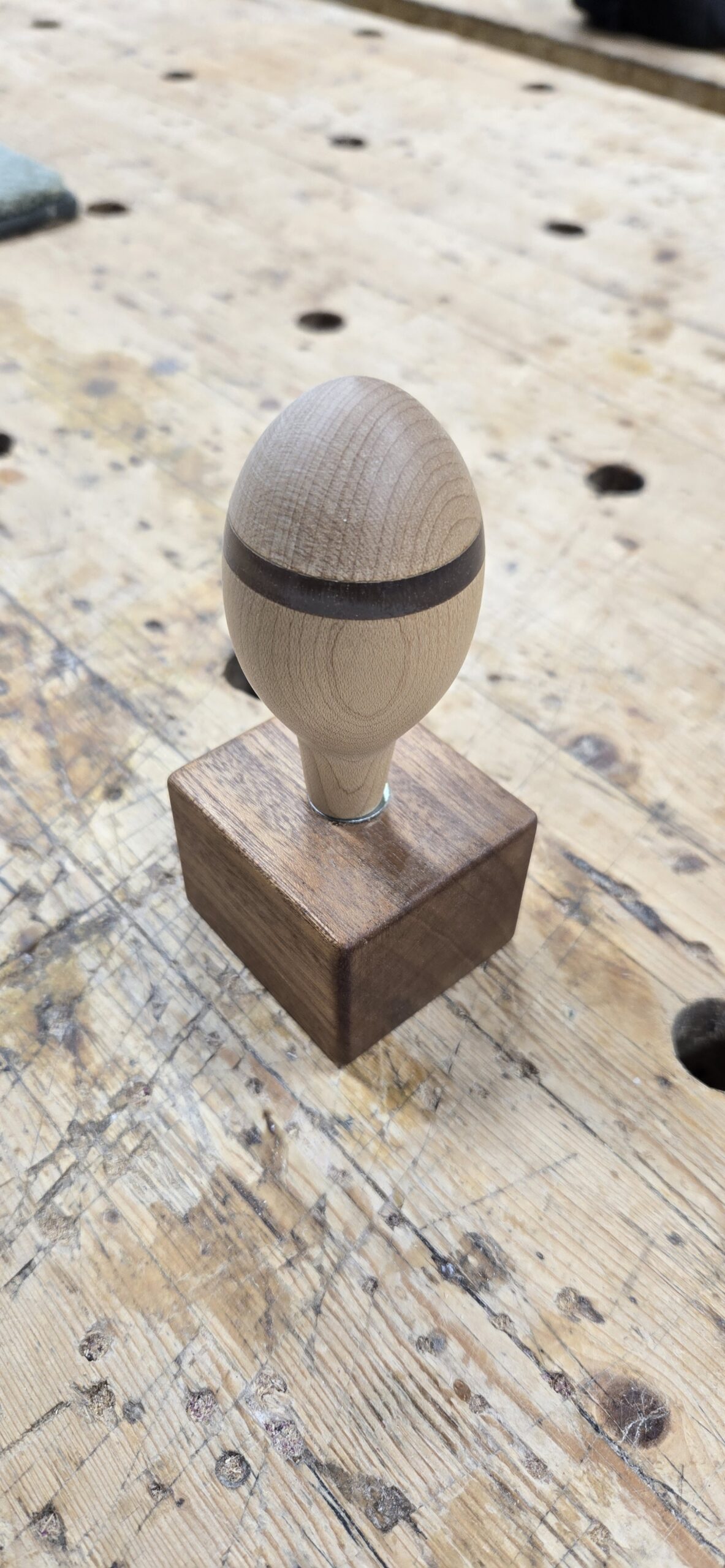
Telescoping Hardware Integration: The assembly features a two-part system—a square walnut anchor block embedded permanently inside the torso cavity and an ergonomic turned topper fitted with a steel machine stud and washer.
Easy Dressing: Fitting mockups, tight turtlenecks, and structured collars over a fixed mannequin neck is notoriously difficult. With this threaded design, sewists can quickly back the topper out, slip narrow garment necklines smoothly over the torso, and re-thread the finial back into place.
Clamping & Handling: Screwing down the topper clamps the fabric cover securely against the internal walnut block, preventing the cover from shifting during heavy draping while providing a reliable handle to lift and reposition the form around the studio.
Engineering the Production: Rotary CNC & Composite Blanks
Producing 50 identical finials with consistent tolerances called for a smart digital manufacturing workflow. Instead of turning blanks individually between centers, we engineered a continuous rotary milling setup.
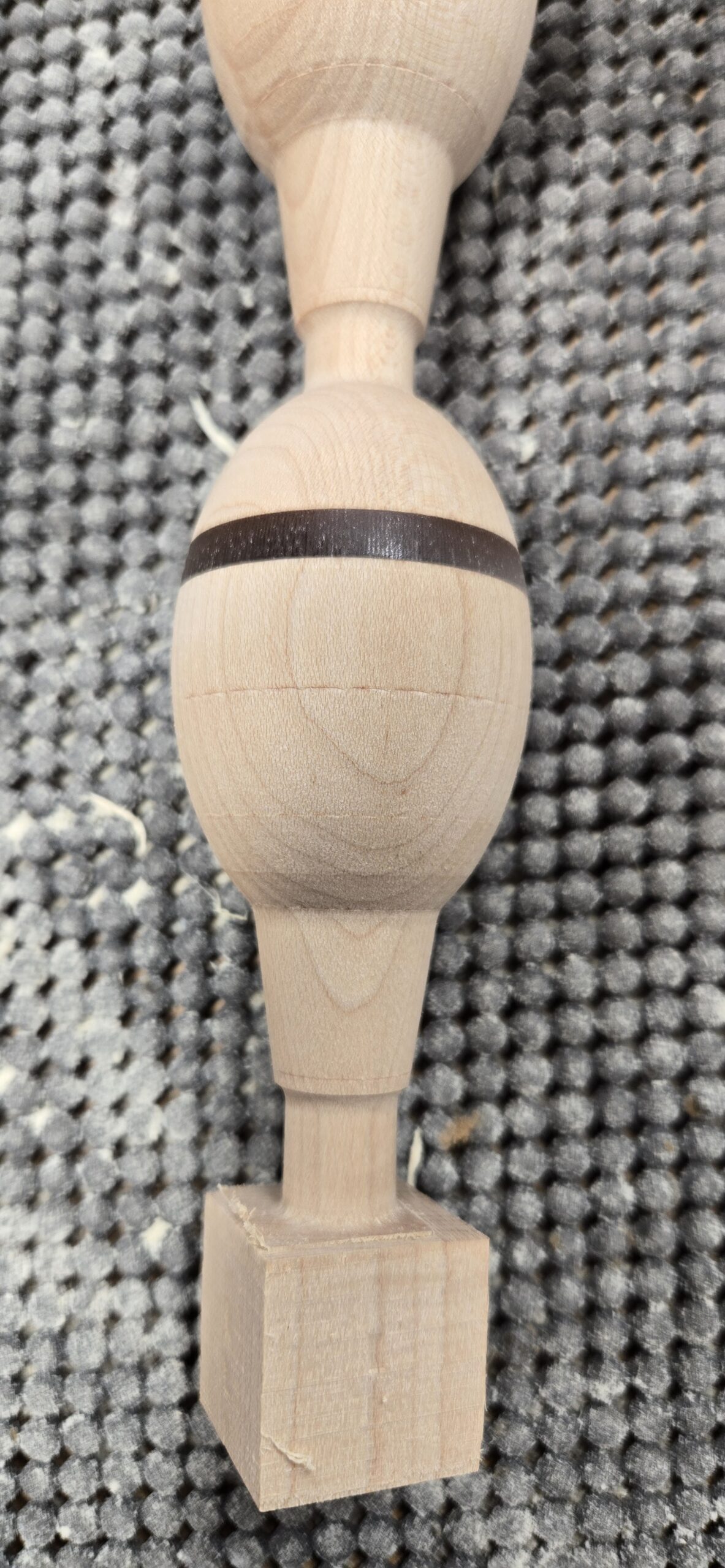
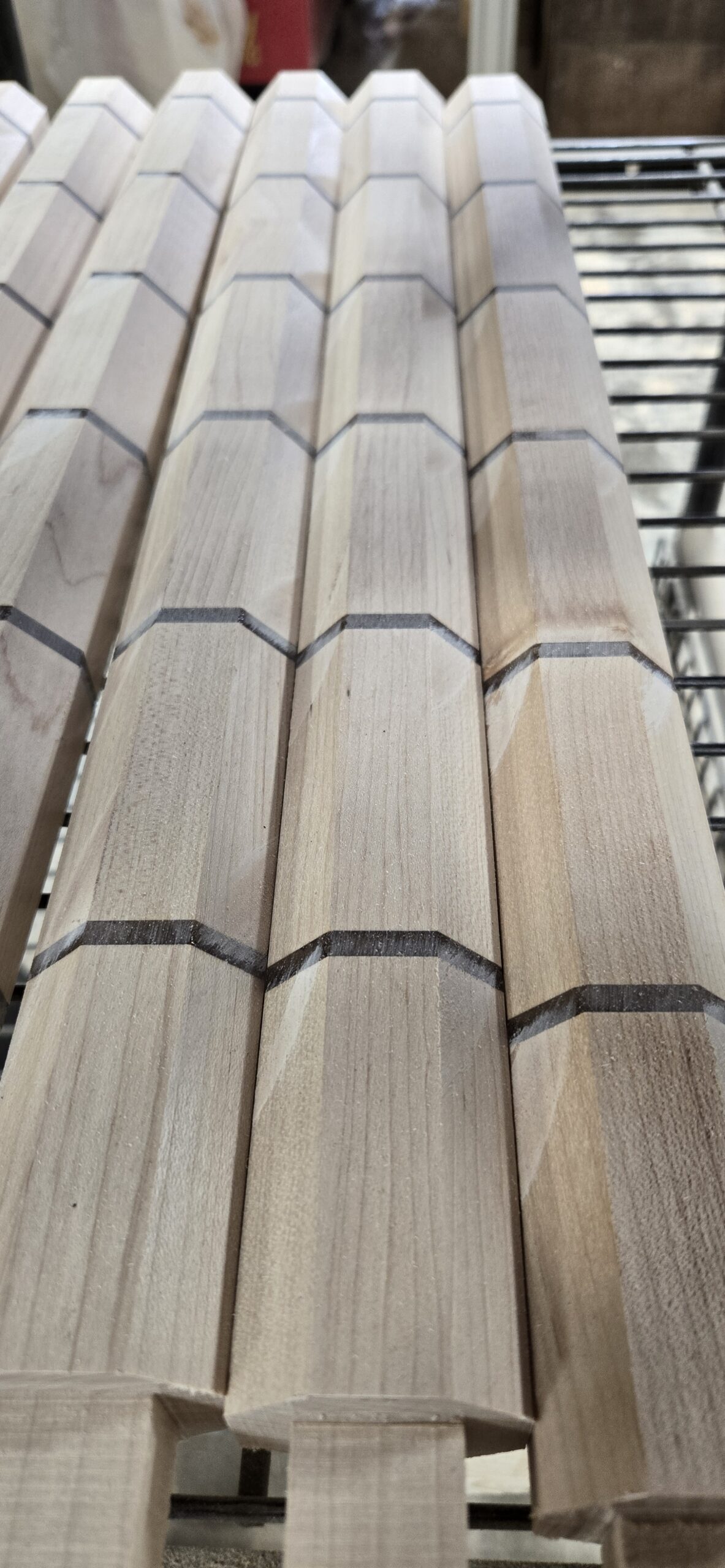
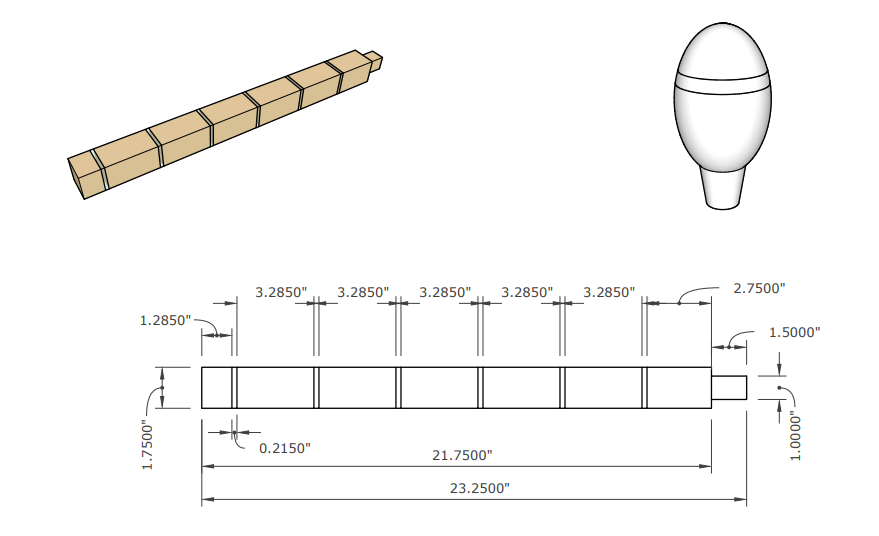
CAD Modeling & Segmented Stick Lamination: We laid out the production run in 23.25-inch long composite blanks, each sized to yield multiple finials. We machined hardwood segments to 3.285-inch intervals and laminated them together with 0.215-inch clear plastic spacers between every section. When carved, this transparent band exposes an optical stripe through the center of the wooden profile.
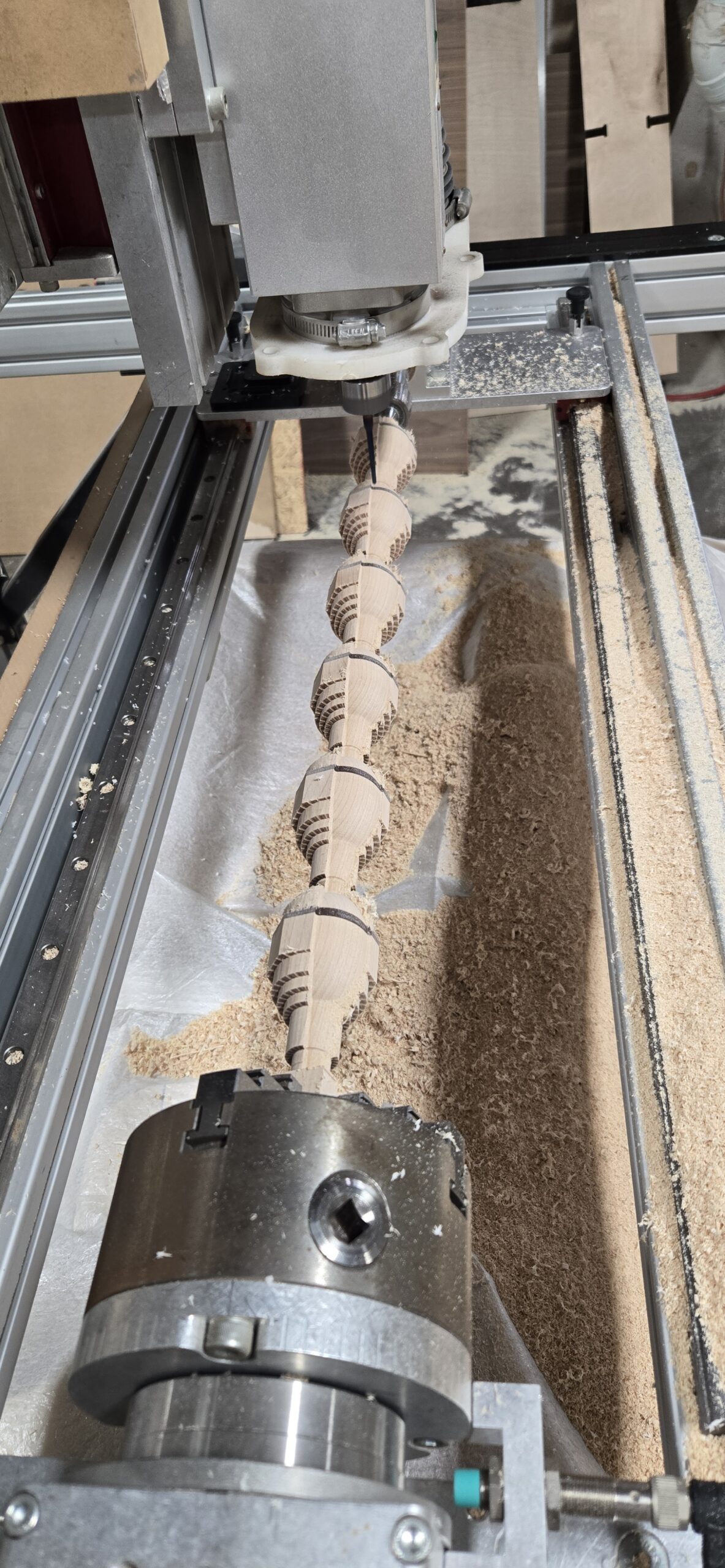
Pre-Milling Chamfers & Drive Tenons: To minimize cutting load on the tooling, we milled a square drive tenon on one end of each stick to lock directly into our rotary chuck and chamfered the blanks into octagonal prisms.
4-Axis Rotary CNC Carving: Mounted on our 4th-axis rotary indexer, each composite stick rotated continuously while the CNC spindle carved out the teardrop curves in sequential 3D toolpaths. This allowed us to carve out a string of identical, dimensionally uniform finials directly along the axis.
Parting, Threading, and Finishing: Once rotary carved, each piece was separated from the runner. We bored true center pilots into the bottom stems to receive the protruding machine-thread studs. Finally, the square walnut anchor blocks were surfaced, chamfered, and fitted with flush hex-drive threaded inserts to receive the finials with zero wobble.
Crafting for Modern Makers
Marrying clear plastic laminations with natural hardwood using 4-axis digital fabrication gave this run the exact balance of tactile craft and contemporary design we aim for at Open Grain.
Seeing 50 of these finished assemblies head out the door to become the crowning hardware on custom Beatrice Forms has been an absolute pleasure. They are heading into studios across the world to help makers build garments that fit without compromise.